
Compassion and its uses
We ask clinicians to be present with people’s suffering, then judge their work largely through completed appointments and paperwork. After more than 25 years in behavioral health, I’ve come to question what the systems I help maintain require of the people providing care. In this post, I explore what I call “Compassion Coercement” and what it asks of me as both a clinician and a leader.

When does learning become work?
One response to my recent piece on AI stuck with me: faculty can take shortcuts because they already know what they’re doing. Students are learning, so they need to do it the long way. I get that, and sometimes I ask exactly that of my students. But I’m still learning when I do professional work, too.

Slowing Down to go Fast
In this Journal post, I reflect on how slowing down in our thinking at work can improve our process and outcomes. It’s a merger of clinical wisdom and leadership coaching ideas.
September is National Suicide Prevention Awareness Month
September is National Suicde Prevention Month.
In this recent Blog Post, I’m hoping you will all join me in talking about and speaking up about the ongoing need and support around suicide.

Why good leaders get rigid under stress
Good leaders do not always become rigid because they lack judgment or care. Sometimes stress, emotion, and perceived threat narrow what they can see and make familiar responses harder to release. In this journal post, I look at how emotion regulation and cognitive flexibility help explain why thoughtful leaders can get stuck, and what it takes to stay rooted without becoming rigid.

Why Activities Keep Getting Mistaken for Outcomes
Counting is easy. Human change is hard. In my latest journal post, I reflect on why activities and outputs so often get mistaken for outcomes, and how funding and oversight systems can push programs to promise change on timelines that do not match how people, organizations, or communities actually change.

When faculty distrust students but trust the machine
When students use AI, their work is treated with suspicion. When faculty use AI, it is framed as innovation.
My latest journal post looks at that contradiction, the power imbalance behind it, and the ethical questions universities should be asking before AI-assisted assessment becomes normal.

Social Media Is Not an Addiction Problem
This reflection challenges the common framing of social media as an addiction problem. Rather than treating digital engagement as a failure of discipline or self-control, the piece explores how social media platforms exploit ordinary human needs for connection, comparison, belonging, and social awareness. Drawing from research on human cognition, social comparison, and technology-mediated connection, it argues that the deeper issue is not addiction, but vulnerability: human minds evolved for embodied, reciprocal relationships and are now navigating artificial systems designed to simulate social engagement at scale.

What Students Say About AI-Human Relationships
I’m a therapist and educator who spends a lot of time thinking about relationships, emotional skills, and what helps people feel connected. Recently, my Human Sexuality students took up the question of AI intimacy, and their responses gave me a lot to sit with. Let’s unpack what their response and modern thinking about human-AI interactions say about us and the robots.

Thinking about thinking in education
Post on education, leadership, and reflective capacity. I’m wondering whether schools and universities are stuck because we lack solutions, or because we haven’t built the adult capacity to think honestly together about the problems in front of us.
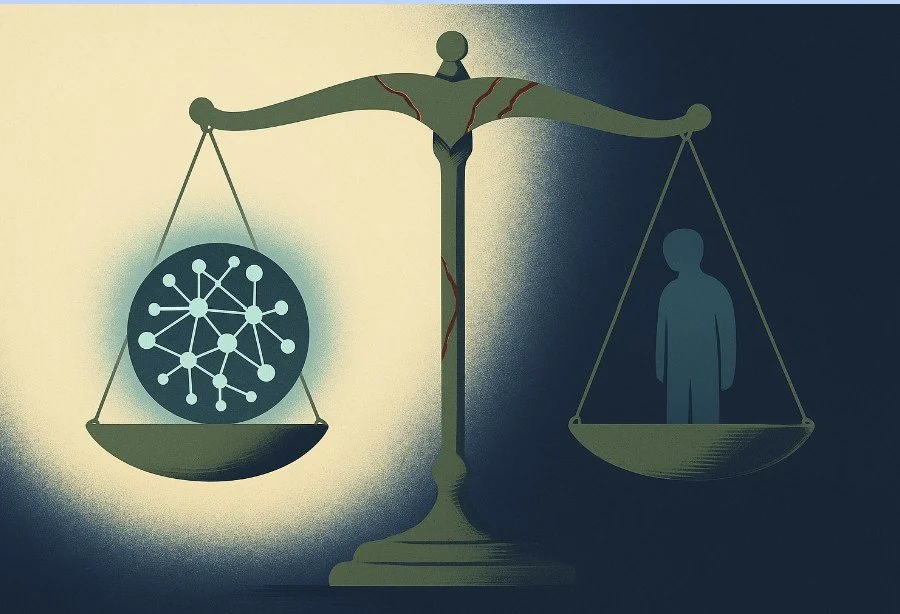
Covert AI Use Is an Organizational Governance Problem
When organizations benefit from AI-assisted work but leave workers guessing about the rules, the risk falls on the person with the least power. Covert AI use is not just a conduct problem. It is a governance problem.
Make safe disclosure easier than secrecy.
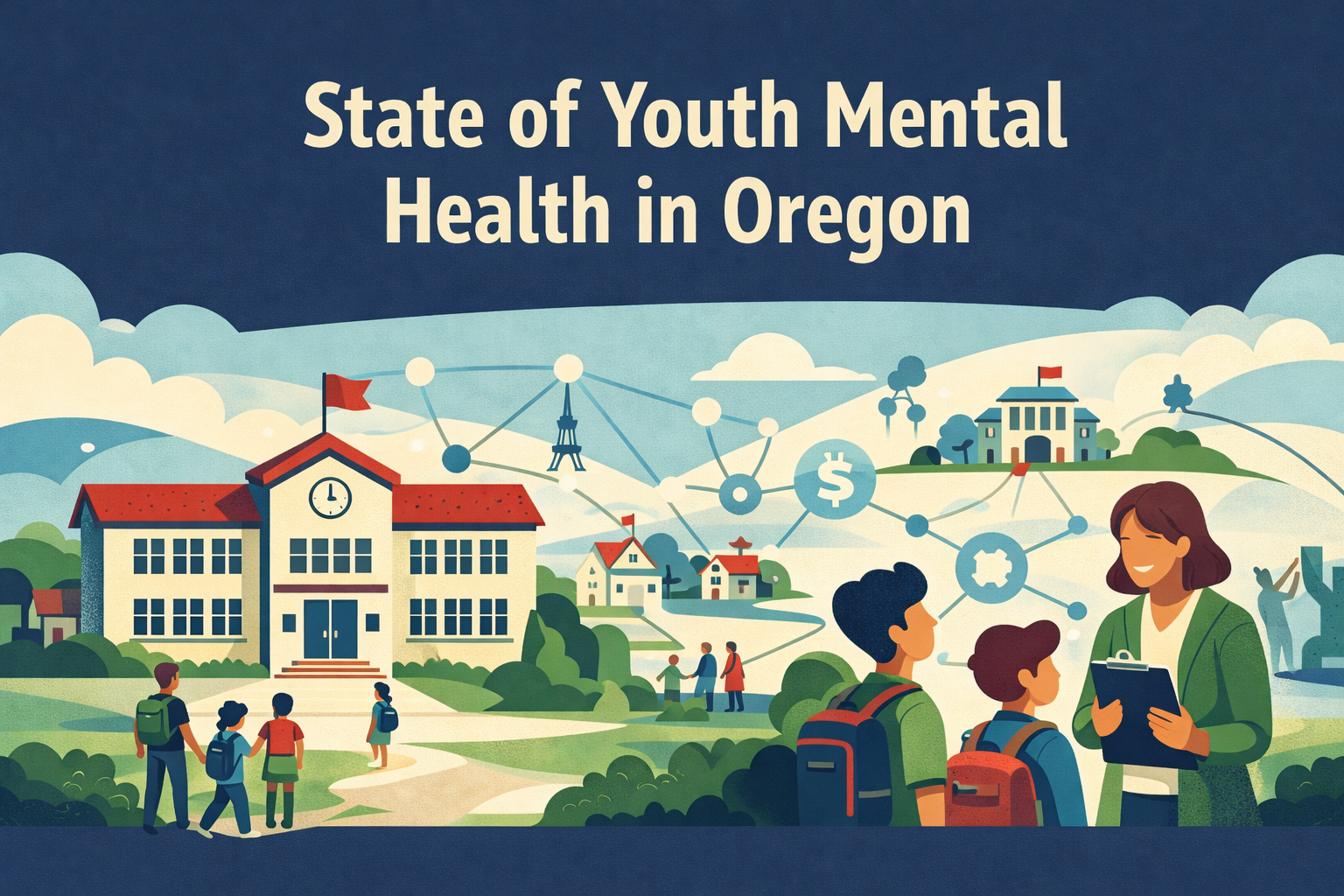
School Mental Health Update
An executive summary outlining the current state of youth mental health in Oregon, highlighting persistent poor outcomes despite improved access to services, recent Medicaid expansion changes affecting school-based supports, and policy recommendations focused on building district-level implementation capacity.

Guardrails or Graveyards: The Urgent Need for Safety in Therapeutic AI
Are AI chatbots crossing dangerous lines?
As language models move into therapeutic spaces, we’re seeing alarming failures: from chatbots encouraging self-harm to reinforcing delusions. In my latest piece, I break down real-world cases, explain why these failures happen, and outline how we can build safer AI systems without sacrificing human care. Safety isn’t optional when vulnerable lives are involved.